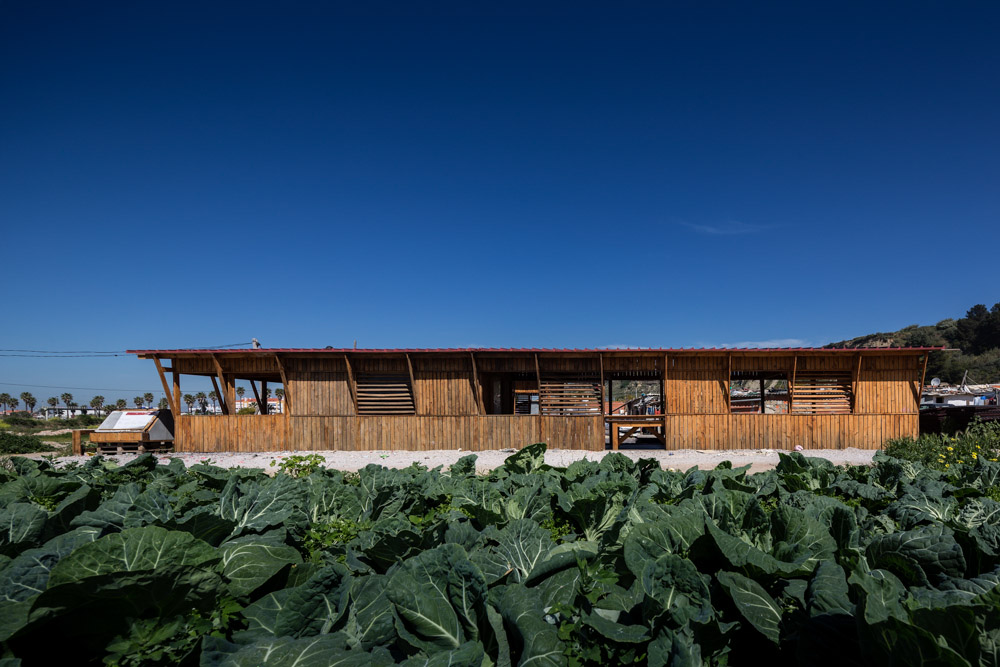



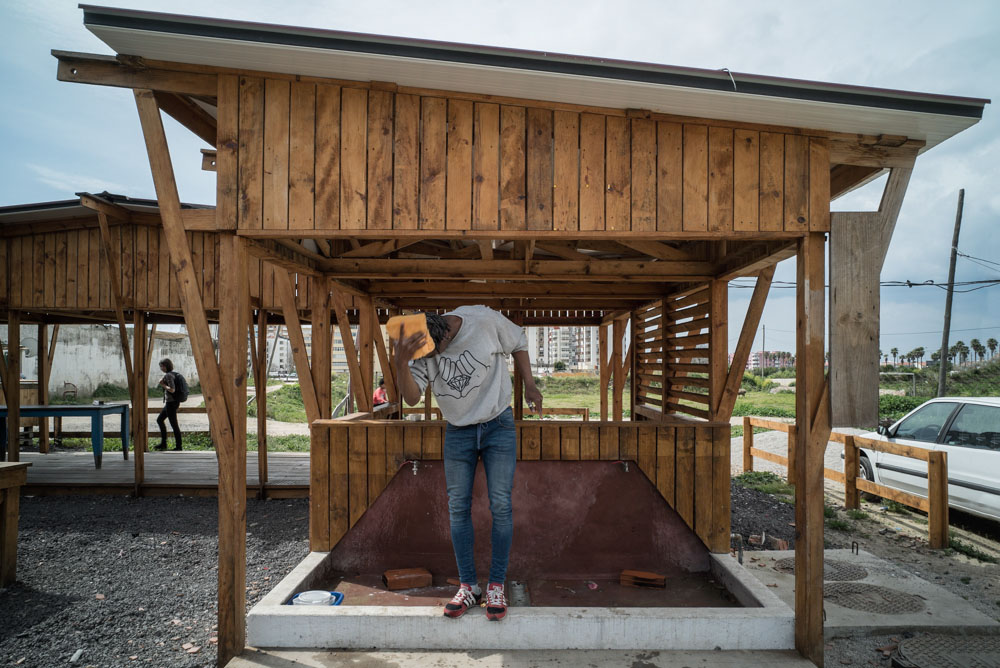



Precarious shacks without water and sanitation are the homes and lifestyle of nearly 500 people - about 30% children - who live in an informal settlement in Costa da Caparica. This neighbourhood, called Terras da Costa, has been inhabited for thirty years by these people.
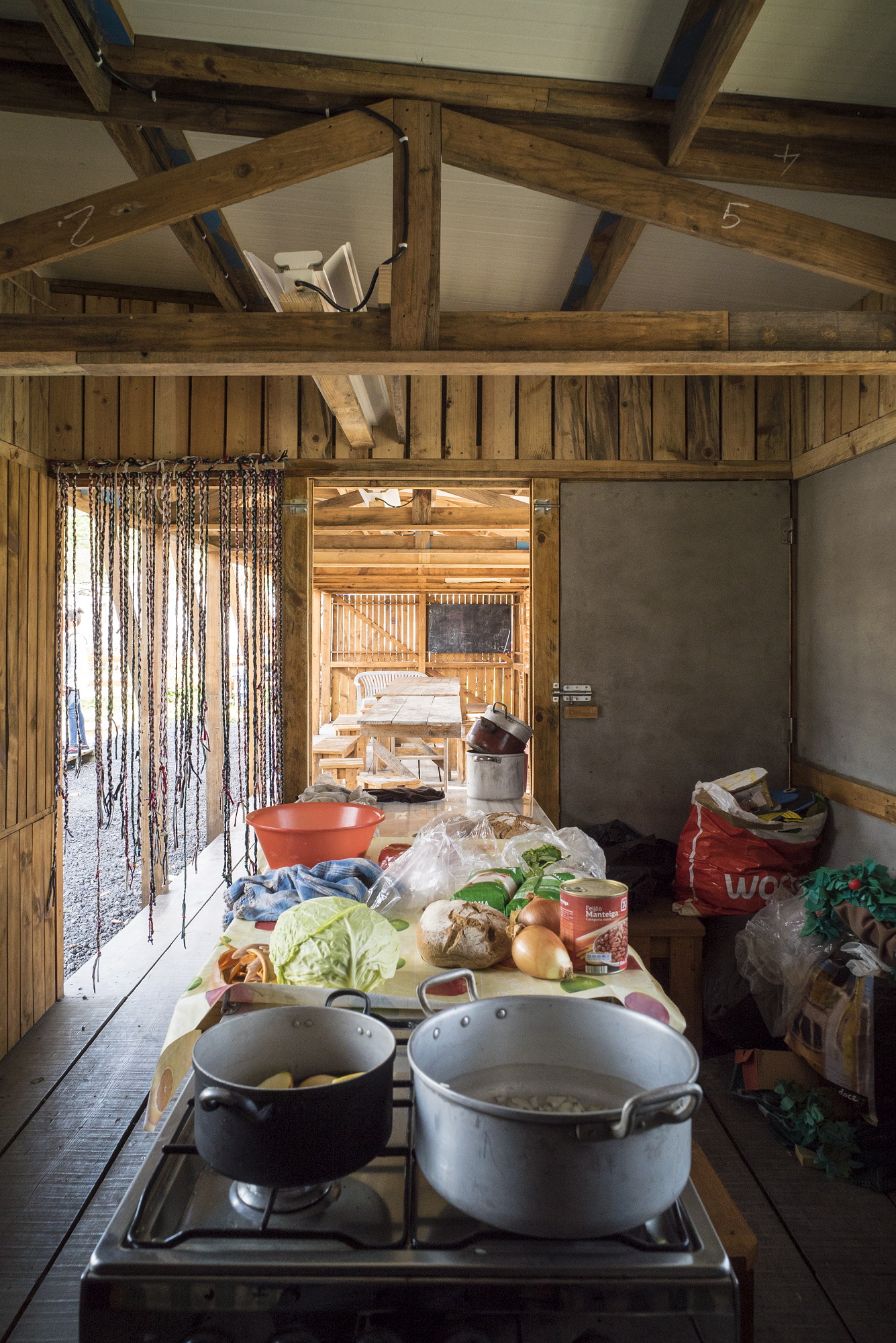
Terras da Costa is an isolated territory, invisible to most people, where the locals feel forgotten except for frequent severe police interventions. Many of the families use campfires to cook inside or near their homes, which is a public safety hazard in neighbourhood without water.
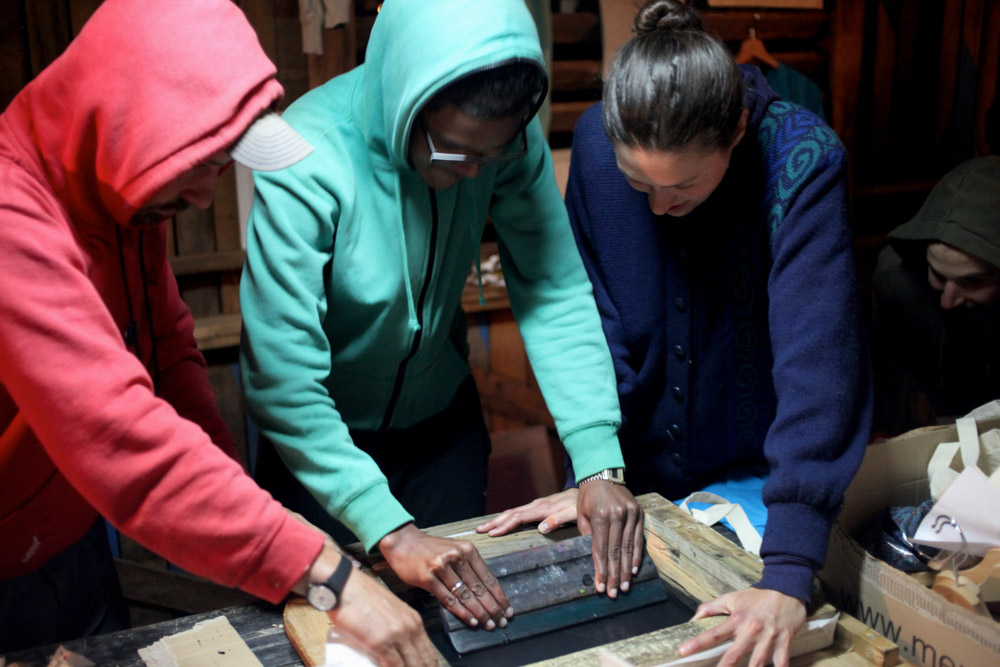
This project was conceived and designed by means of an extensive and highly participatory process, in which the communities of Terras da Costa were always present and actively involved in the discussion. The construction process was accompanied by activities aimed at helping the community acquire tools to manage and develop the kitchen, its utility rules and regulations, users rights and duties.
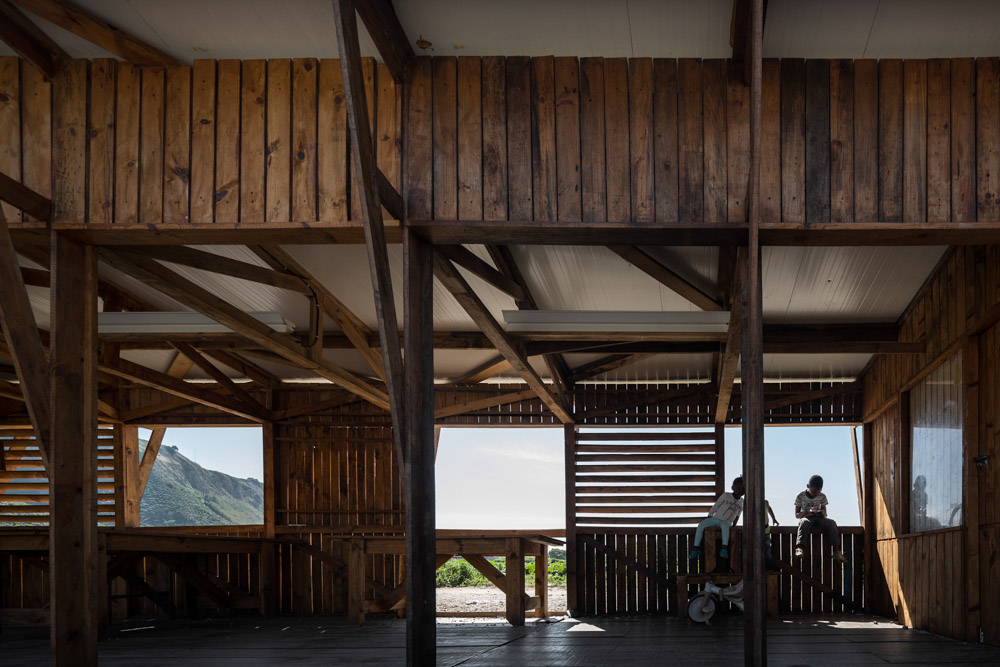
A broad international team of architects, urbanists, carpenters, artists, social mediators, as well as a growing number of volunteers have joined the project, making it bigger and better. The simple wooden framing technique and the numerous activities around the building site allow everyone to become part of the project.
The construction becomes a moment for knowledge-sharing and hands-on learning.
Project by: Colectivo Warehouse + Ateliermob Me: Concept, Design, Participatory Methodologies and Build
Terras da Costa is an isolated territory, invisible to most people, where the locals feel forgotten except for frequent severe police interventions. Many of the families use campfires to cook inside or near their homes, which is a public safety hazard in neighbourhood without water.
This project was conceived and designed by means of an extensive and highly participatory process, in which the communities of Terras da Costa were always present and actively involved in the discussion. The construction process was accompanied by activities aimed at helping the community acquire tools to manage and develop the kitchen, its utility rules and regulations, users rights and duties.
A broad international team of architects, urbanists, carpenters, artists, social mediators, as well as a growing number of volunteers have joined the project, making it bigger and better. The simple wooden framing technique and the numerous activities around the building site allow everyone to become part of the project.
The construction becomes a moment for knowledge-sharing and hands-on learning.
Project by: Colectivo Warehouse + Ateliermob Me: Concept, Design, Participatory Methodologies and Build